

News Summary
Glenfarne Alaska LNG aims to begin construction on a natural gas pipeline by late 2026, targeting operational status by mid-2029. This ambitious project is designed to transport approximately 3.5 billion cubic feet of gas daily, although it faces several regulatory challenges and uncertainties regarding funding and environmental concerns. Amid declining revenues, Alaska officials express optimism about the economic benefits of the pipeline, despite ongoing scrutiny from various stakeholders.
Anchorage, Alaska – Glenfarne Alaska LNG is targeting late 2026 to initiate construction of its proposed natural gas pipeline, with plans for the project to become operational by mid-2029. This announcement follows a meeting between Glenfarne Alaska LNG President Adam Prestidge and Japanese Consul Kiyohiko Hamada and includes participants from 8 Star Alaska, a subsidiary of the Alaska Gasline Development Corporation (AGDC).
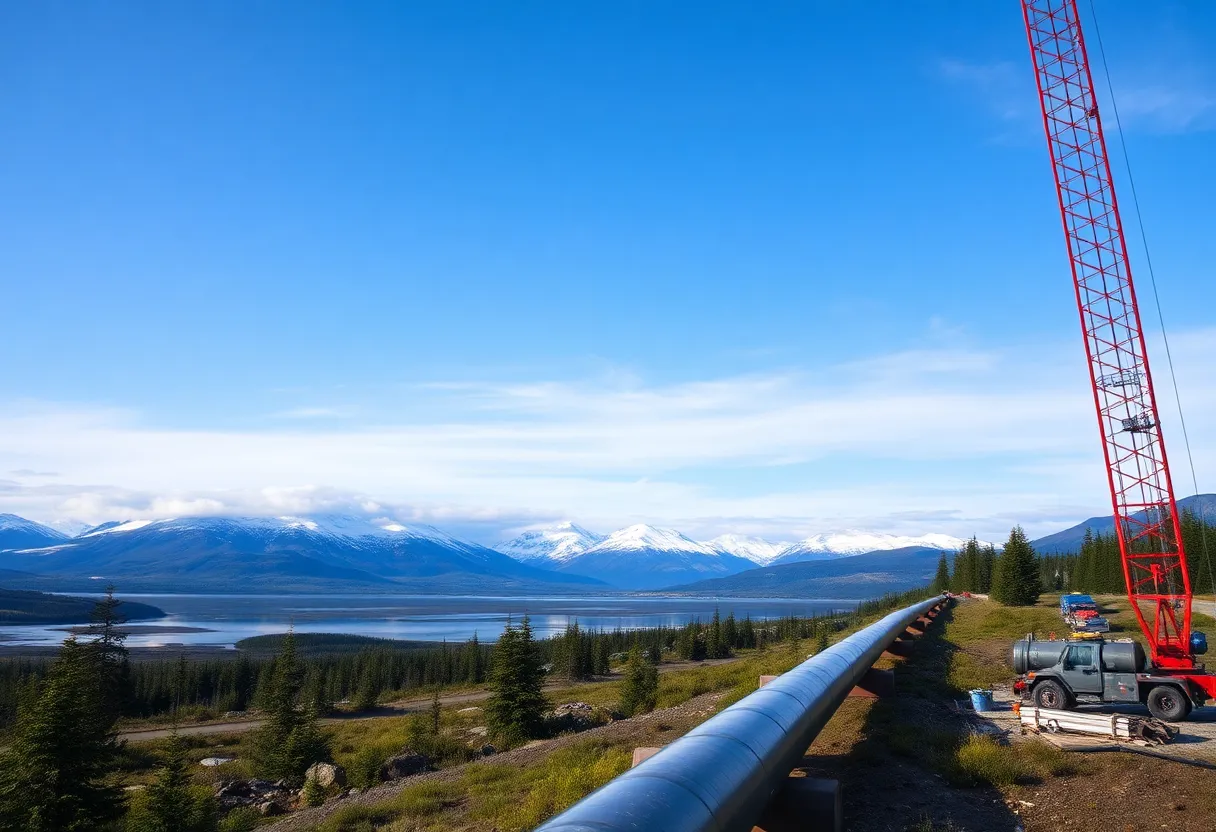
The proposed pipeline is designed to deliver approximately 3.5 billion cubic feet of gas per day and will largely follow the existing route of the Trans-Alaska Pipeline System. Despite this progress, it is important to note that the update reflects Glenfarne’s internal timelines and does not yet incorporate formal confirmation from the Japanese government regarding their involvement in the project.
Interior Secretary Doug Burgum has indicated that construction might commence as early as 2026, aiming to bolster Alaska’s export capacity of liquefied natural gas (LNG). While the timeline for the project is optimistic, Glenfarne Alaska LNG faces several regulatory obstacles, with three key permits still pending before construction can begin.
Alaska is currently navigating significant budgetary challenges. Governor Mike Dunleavy has recently vetoed several bills, resulting in cuts exceeding $100 million from the state budget due to declining oil revenues. The Alaska Gasline Caucus has convened multiple meetings to discuss the pipeline’s potential, with officials expressing the hope that construction can begin as early as mid-2026.
Support for the project is evident at both state and federal levels. The administration of former President Donald Trump pledged its backing for the initiative, prioritizing the development of Alaska’s LNG capabilities through a series of executive orders. However, the project can still expect scrutiny from environmental groups and community members who have raised concerns regarding the pipeline’s impact on wildlife and traditional lands.
Glenfarne has not yet disclosed the total cost or funding sources for the pipeline project, which has seen numerous proposals in the past beset by financial difficulties and regulatory delays. The state of Alaska has invested nearly $1 billion over the past 25 years on various gas line ventures, with Glenfarne recently acquiring a 75% stake in this most recent endeavor from AGDC.
As the project moves forward, concerns about rising costs and overall feasibility remain prominent. The fluctuating nature of oil prices and increased competition in the energy market add layers of complexity to the prospect of the pipeline becoming a reality. Nonetheless, optimism persists among state officials and stakeholders who recognize the potential economic benefits of enhancing Alaska’s LNG capabilities.
In summary, Glenfarne Alaska LNG is pushing forward with plans for a major pipeline project that could significantly impact the state’s natural gas export capacity. Yet the path ahead is fraught with regulatory challenges and financial uncertainties that will need to be navigated effectively.
Deeper Dive: News & Info About This Topic
HERE Resources
Additional Resources
- Alaska News Source
- Wikipedia: Natural Gas in Alaska
- Anchorage Daily News
- Google Search: Alaska LNG Pipeline
- Rolling Stone
- Google Scholar: Alaska LNG Project
- New York Times
- Encyclopedia Britannica: Alaska LNG
- Reuters
- Google News: Alaska LNG Pipeline